
Guides & Advice
Olive wood cutting board: how to choose yours
Apr
A warm loaf to slice, a few vegetables for dinner, a selection of cheeses when friends arrive… An olive wood cutting board feels at home in many everyday moments. To choose one you will enjoy reaching for, start with the way you like to cook and share food.
Size, a flat surface, a juice groove or a handle will then help you narrow down the options. Here are a few practical pointers for finding a board that belongs in your kitchen and at your table.
1. Why choose an olive wood cutting board?
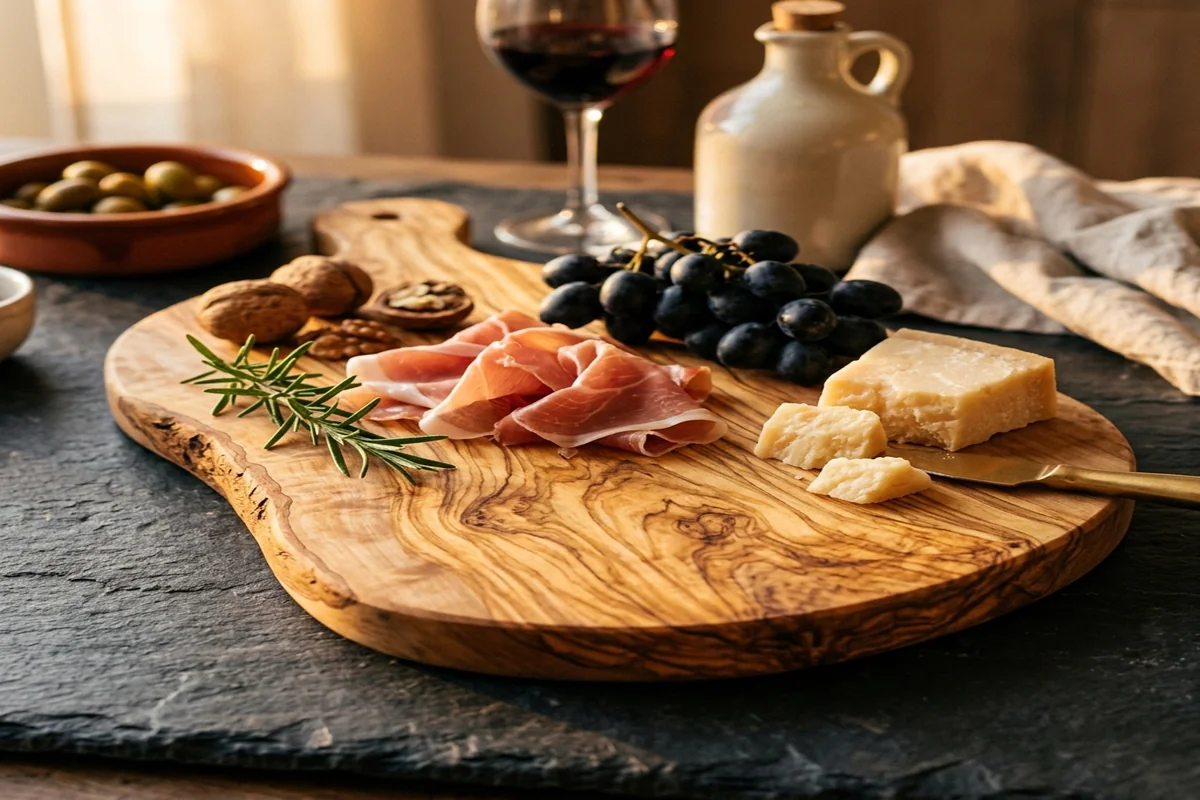
Olive wood brings golden tones and contrasting grain to the kitchen. At the table, it provides a welcoming setting for rustic bread, cheese or fresh fruit.
The pattern varies from piece to piece. Two boards of the same model share the same shape, while each has its own grain. That natural variation is part of the pleasure of choosing a wooden piece.
Knife marks can develop with use. Regular care helps you look after the surface; whether a board can be restored depends on its condition. If you are still comparing materials, our guide to choosing wood for a cutting board explores the subject further.
2. What size will fit your kitchen?
Think about the preparation you do most often. Do you slice a little fruit, cut a loaf or prepare several vegetables for a family meal? A suitable size gives you room to work while remaining manageable to wash and store.
Some of our elongated designs offer 30–32 cm and 35–37 cm options for a more compact length. 40–42 cm and 45–47 cm options provide more length for generous preparation and presentation. Available sizes depend on the model.
Length is only part of the picture: look at the width and shape of the usable surface too. A handle takes up some of the overall length, and a groove slightly reduces the flat working area.
Before choosing, take a moment to measure your worktop, sink and storage space. Browse our olive wood cutting board collection to compare the designs.
3. A flat surface, juice groove or handle?
A flat surface for preparation and presentation
For slicing bread, preparing vegetables or arranging food to share, an uninterrupted surface gives you flexibility. Our cutting and serving board has an elongated shape without a groove or integrated handle.
A groove for juicy foods
A groove around the edge helps collect some liquid when slicing fruit or cooked meat. Cleaning is still needed after use. If you enjoy a clearly defined working area, take a look at the rectangular board with a juice groove.
A handle for bringing food to the table
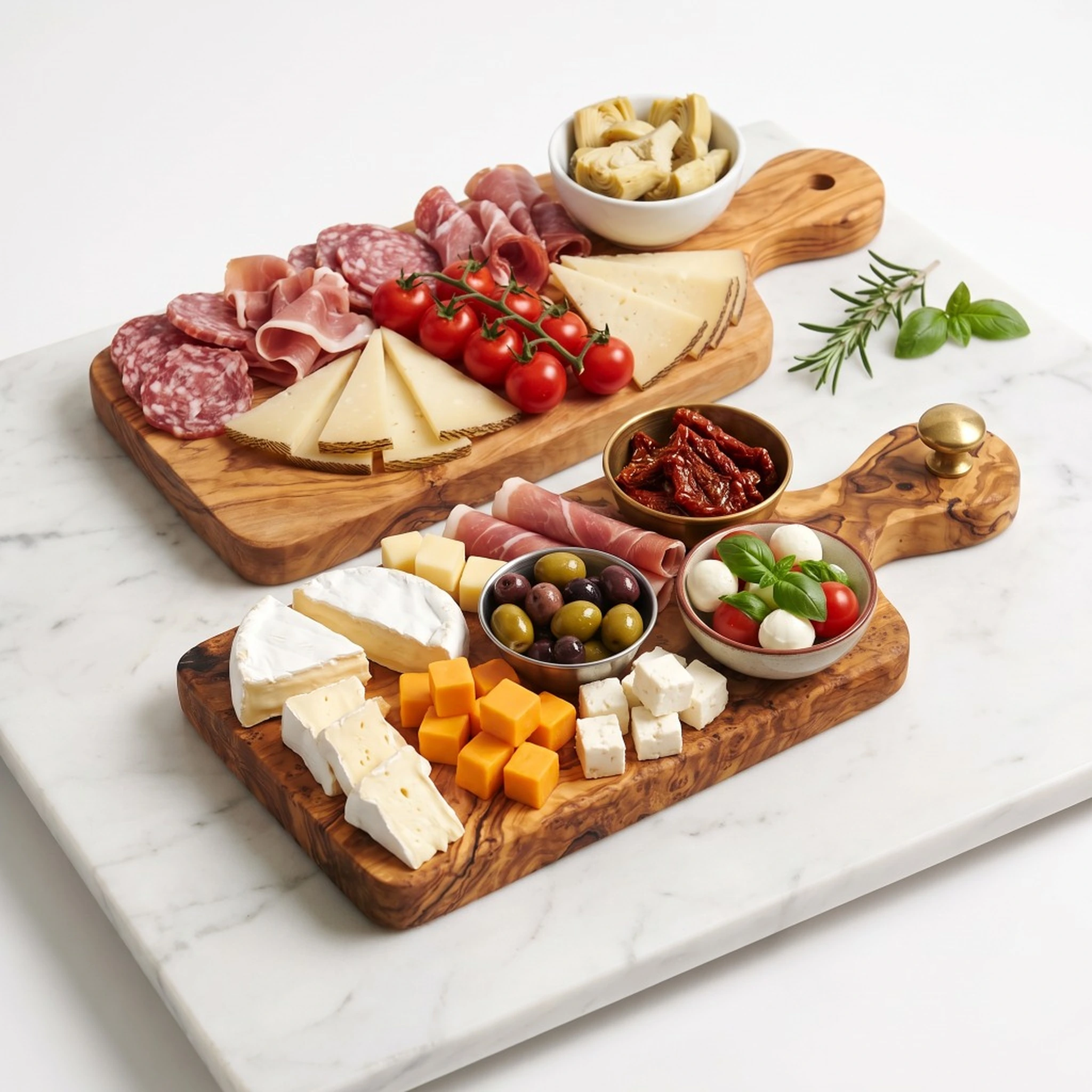
When a board often travels from kitchen to table, a handle can make it easier to hold. The board with a juice groove and handle combines both features. For cheese and charcuterie on a flat surface, our serving board with a paddle handle offers another shape to explore.
4. The details to look at before choosing
Photographs give you a first impression of the piece. To refine your choice, look at its shape, stated dimensions, thickness where provided and described uses.
A smooth surface and carefully finished edges make everyday handling more pleasant. Changes in colour and natural knots are part of the wood; they should be distinguished from cracks or splinters that affect use.
For food preparation, follow the information about the model’s finish and care. Have a question about a shape or size? The Oricrafts team can help you choose a piece that suits your routine.
5. One board, a duo or a thoughtful gift?
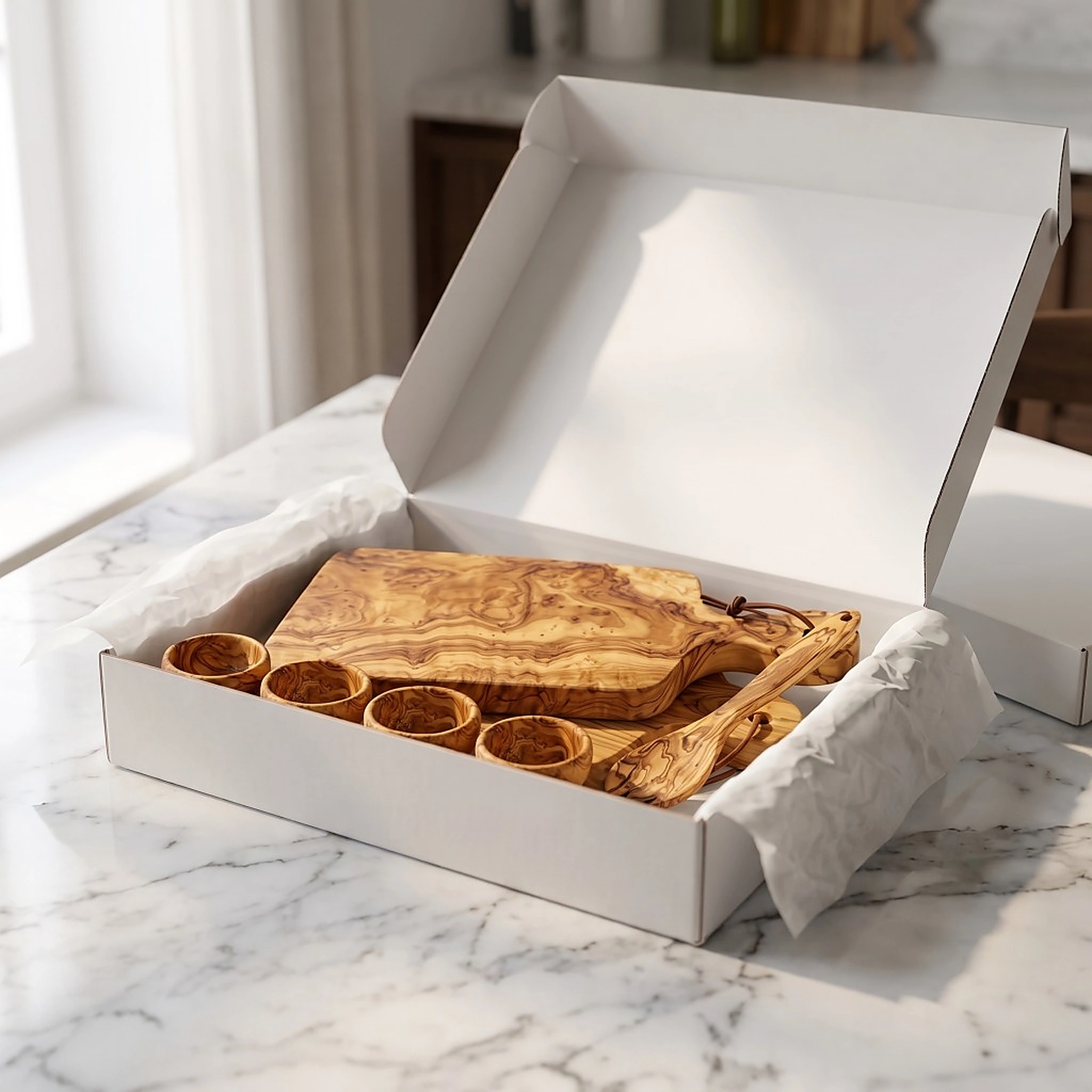
A single board is a welcome companion for everyday preparation. Two boards let you keep a surface available while the other is being used for preparation or serving. Our rectangular cutting board duo contains two boards in your chosen matching size.
For a gift, think about the recipient’s favourite moments: cooking each evening, putting together an appetiser platter or welcoming friends for a meal. A size that fits their kitchen matters just as much as the grain of the wood.
Compare the prices shown on current product pages, considering the number of pieces and how they will be used. Dimensions, availability and delivery information will help you complete your choice.
6. A few simple ways to care for it
After each use, wash the board by hand with hot water and mild washing-up liquid, then rinse. Wipe all sides dry and let it finish drying with air circulating around it.
For Oricrafts boards, avoid soaking and dishwasher cleaning. When the surface looks dry, use a care product intended for food-contact wooden kitchenware and follow its instructions. Our olive wood care guide walks you through the steps.
7. Your questions before choosing
Which board works for both cooking and serving?
A flat surface suits many preparation tasks and gives you room to arrange a platter. A groove is useful for some juicy foods, while a handle can help when serving. Choose the features that match the moments you enjoy most.
Can I prepare raw meat or fish on it?
Keep one board for raw meat and fish, and another for cooked food, clean vegetables and food ready to serve. Clean the board thoroughly after use. Turning a reversible board over does not replace this separation or cleaning.
Will my board have exactly the same grain?
Grain and colour vary naturally. Photographs show the model; your piece will have its own pattern, with the characteristics described on its product page.
Can I keep using a heavily marked board?
Knife marks can develop over many meals. If a crack or deep grooves make the surface difficult to clean, stop using it for food preparation and seek advice about replacing it.
Once you have a size and your favourite uses in mind, you can enjoy choosing the grain that catches your eye: a piece to reach for when the next meal comes around.