
History & Craftsmanship
How Olive Wood Is Sustainably Harvested in Tunisia
May
How Tunisian Olive Wood Goes from Tree to Finished Object
Before reaching a kitchen, an olive wood piece goes through several stages: material selection, drying, shaping, sanding and finishing. This process helps explain the variations in grain and form that make every object different.
A material from a cultivated tree
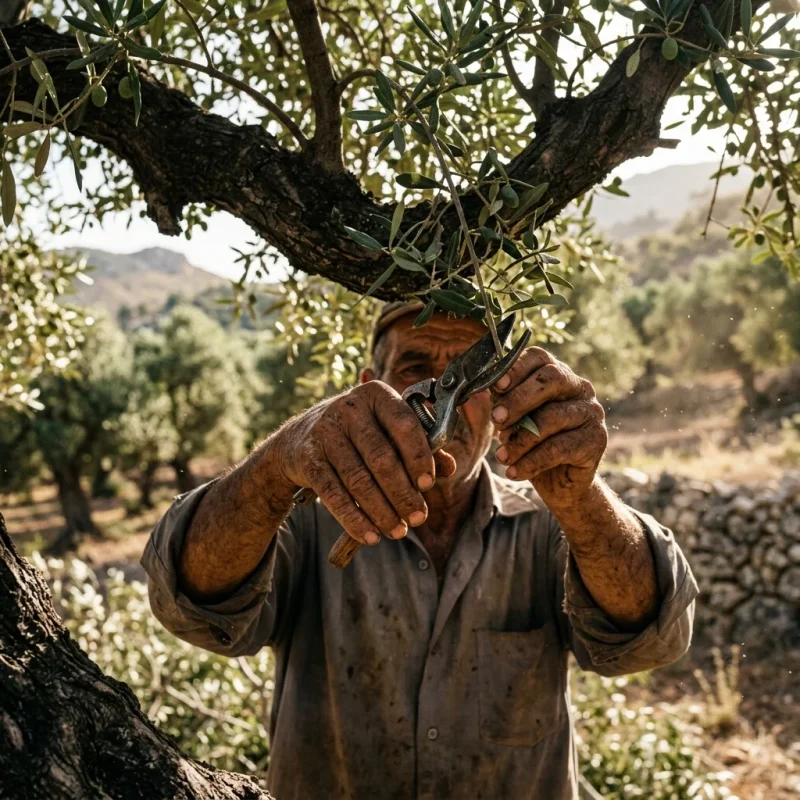
The olive tree is first grown for its fruit. Wood used for craftwork may come from pruning, branches removed during maintenance or trees at the end of their life. The precise origin varies by batch, so the product page and customer service are the best sources for a specific item.
1. Selection
The craftsperson examines the section, grain, knots and any cracks. One part may suit a board, while another may become a bowl or mortar. The final form depends on both the intended use and the available piece of wood.
2. Drying
The wood needs to lose moisture in a controlled way before shaping. Appropriate drying helps limit movement and cracking without removing the natural variation of solid wood.
3. Shaping
Flat pieces are cut and shaped. Bowls and mortars may be turned. At each stage, the maker adapts the design to the grain and natural irregularities of the wood.
4. Sanding and finishing
Sanding smooths the surfaces and edges. A finish suitable for food-contact items can then protect the wood and reveal its contrast. Check the relevant product page for the finish used on a particular item.
5. What to check before buying
- the dimensions and weight listed for the model;
- the recommended use: cutting, serving, preparation or decoration;
- the care instructions;
- the natural variations described;
- the available origin and finish information.
6. Helping the piece last
Wash olive wood by hand with a soft sponge and dry it promptly. Avoid the dishwasher, soaking and direct heat. When the surface becomes dry, use a care product suitable for food-contact woodenware.
For detailed steps, read the olive wood care guide.
Conclusion
Understanding the path from tree to object helps you choose a suitable piece and respect its natural characteristics. For the origin, finish, dimensions or stock of a particular item, consult its product page or contact Oricrafts before ordering.