
Olive Wood Care
How to care for olive wood?
May
A salad bowl at the centre of the table, a board brought out for dinner, a favourite spoon beside the stove… Olive wood belongs to the little pleasures of everyday cooking. A few simple habits help you care for it: hand wash, dry promptly and look after the finish when needed. This guide takes you from daily cleaning to choosing a care oil that suits your piece.
How should you clean olive wood after use?
After the meal, remove food scraps and wash your piece by hand with hot, not boiling, water and a little suitable washing-up liquid. A clean sponge or brush will help you reach the grooves without damaging the finish. Rinse away the soap.
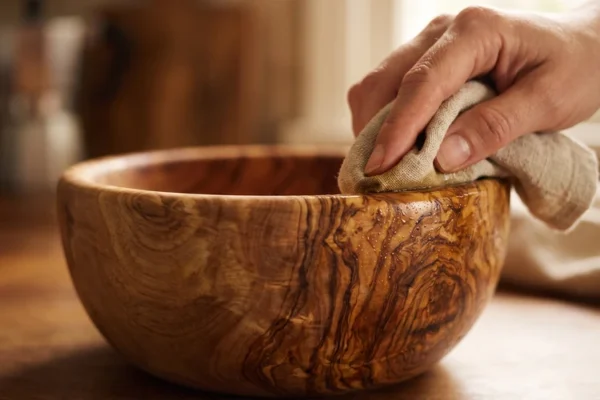
Use a clean cloth or paper towel to wipe all sides, then let the piece finish drying with air circulating around it. Both sides of a board need to dry; remember to remove any water from the bottom of a bowl. Put it away once it is completely dry.
Hand washing keeps contact with water brief. Avoid soaking and dishwasher cleaning, then let your piece air dry away from radiators and direct sunlight. Items with a coating, resin or assembled components also need the particular care specified for their finish.
What about preparing raw meat or fish?
For a well-organised kitchen, keep one board for raw meat and fish and another for ready-to-eat foods. Clean surfaces after use; do not place cooked food on a surface that held raw food without appropriate cleaning.
Lemon and salt do not guarantee disinfection. If disinfection is needed, choose a product for food-contact surfaces that is compatible with the finish, and follow its instructions, including rinsing. The Anses household hygiene guidance (in French) provides further guidance.
Which oil should you choose for olive wood?
The right product is one that suits your piece: an oil or wax formulated for food-contact wood and compatible with its finish. Look for that intended use on the label. An oil made for decoration, DIY or cosmetics is not automatically suitable for a cutting board or salad bowl.
For some oiled wood surfaces, food-grade mineral oil sold for that purpose may be suitable. A wax intended for kitchen woodware is another option, depending on its ingredients and instructions. If your item is varnished or combines wood and resin, follow its own guidance rather than advice for a solid, oiled board.
Can you use olive oil?
Olive oil feels familiar in the kitchen, but an edible oil is not necessarily the best choice for wood care. Some cooking oils can turn rancid and leave an unwanted smell or taste. Manufacturers’ recommendations vary: for regular care, favour a product intended for kitchen woodware and recommended for your finish.
How do you oil an olive wood board or salad bowl?
If your piece has a finish maintained with oil, choose a moment when it is clean and completely dry. You can then give it a little care in a few simple steps.
- Check that the care product is compatible with the piece.
- Apply a thin, even coat with a clean cloth, following the quantity recommended on the label.
- Spread it across the relevant surfaces; include a board’s edges and both faces if the instructions recommend this.
- Allow it to absorb for the time recommended by the product manufacturer.
- Wipe off any excess and wait the stated time before putting the item back in contact with food.
Let the wood’s condition guide you: a dry or dull surface may benefit from care. Washing, use, storage and finish all affect frequency, so there is no single timetable for every piece. If the wood stays greasy or sticky, avoid adding more coats.
Stains, smells and cracks: what should you do?
A smell or stain persists
After a colourful or fragrant meal, start with thorough washing and complete air drying in a ventilated place. Some foods leave lasting discolouration: cleaning may not remove every stain.
Before trying lemon, salt, an abrasive or sanding, check your piece’s care instructions. A treatment suited to a solid board may damage a finish or decorative surface. Let it dry gently in the surrounding air, away from direct sunlight and heat.
The wood looks lighter or duller
On a clean, dry surface, a compatible care product may refresh the wood’s appearance, without promising its exact original colour. If a mark seems unusual or a smell persists, ask for advice before using the piece with food again.
A crack appears
A crack needs more attention than routine oiling: care oil does not repair it. If it traps residue, or the surface and grooves become difficult to clean, set the piece aside for food preparation. You can contact Oricrafts with the model and photographs so we can help you assess its condition.
Adapt care to each type of item
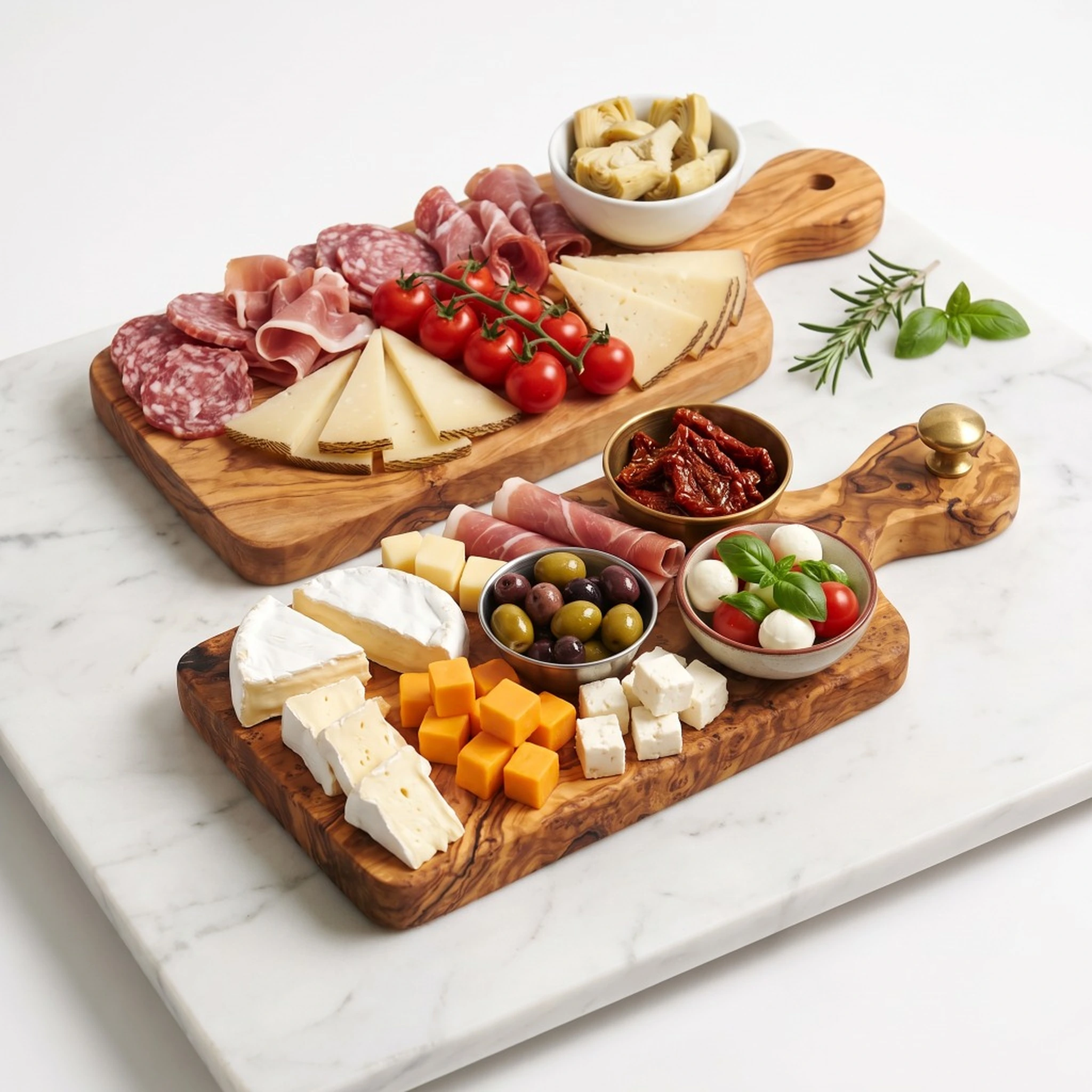
Your board accompanies you from preparation to serving. Clean its faces, edges and grooves, then let both sides dry. Explore our olive wood cutting boards and cutting board buying guide to choose around your cooking habits: a presentation surface is not automatically intended for intensive cutting.
After a salad or shared meal, wash your bowl inside and out. Remove water from the bottom and let it dry; avoid soaking or leaving liquids standing in it. To find a shape you will enjoy at the table, explore our olive wood salad bowls, with regular or rustic rims.
For spoons, spatulas, bowls and mortars, take a moment to clean the food-contact areas and recesses. Let them dry completely before putting them away. As with a board or salad bowl, oil choice and application frequency depend on the finish.
How should you store olive wood?
Give your pieces a dry, ventilated place away from heat and large changes in humidity. Wait until they are completely dry before placing them in a cupboard or stacking them.
These habits help you enjoy your pieces over many meals. Their lifespan also depends on their condition, finish and use; no particular number of washes or oil applications can guarantee it.
Frequently asked questions about olive wood care
Can olive wood go in the dishwasher?
For the Oricrafts pieces in this guide, choose hand washing in line with each product’s care advice. This avoids the dishwasher’s prolonged cycles of heat and moisture.
How often should you oil olive wood?
Look at your piece’s condition and follow the instructions for its finish and care product. Washing and storage affect its needs; a weekly or monthly schedule is not necessary for every item.
Does oiling replace cleaning?
No: always clean the piece first and let it dry completely. Care for its finish afterwards, if needed. Oil does not replace removing residue or following food hygiene practices.
Are lemon and salt enough to disinfect a cutting board?
This method does not guarantee disinfection, especially after raw foods. Keep a dedicated board and follow cleaning advice and the instructions for any suitable food-contact product.
Read also
Would you like to explore this material and its place in your kitchen? Read Why choose olive wood in the kitchen?.
Useful sources
For further reading, the USDA cutting board hygiene guidance complements the Anses guidance on cleaning and separating uses. The Forest Products Laboratory guidance on finishes for wooden food-contact items explores different finishes and suitable products. Keep the instructions for your piece and its finish close to hand too: they remain your guide to its particular care.